#2 What is an ETF? And what should you look for when choosing one?
Have you heard of ETFs before, but aren't sure what they are? Don't worry, we're here to answer all your questions. In this episode of the podcast, Felix Niederer – founder and CEO of True Wealth – explains everything you need to know about exchange-traded funds.
What is an ETF?
Imagine you go to the market and buy a basket of different fruits. That’s exactly how an ETF (Exchange Traded Fund) works. Instead of fruits, however, this basket contains securities, such as stocks. If it’s a stock ETF, the basket contains shares of various companies. The key point? An ETF typically tracks an index, which is a collection of selected stocks. These stocks are weighted in specific proportions, with larger companies carrying more weight than smaller ones. The goal of an ETF is to replicate these weightings and thus mirror the index’s performance.
Why should you be interested in ETFs?
Well, if you want to approach your investments in a systematic way, then ETFs are your best friend. Why? Because they allow you to invest in different asset classes and thus diversify your risk. Instead of investing in just a few stocks, you can spread your money across different sectors – whether it’s the Swiss stock market, the U.S. market, or others. The best part? ETFs are cost-effective. Small differences in costs may not seem like much at first glance, but over time they can add up to a significant difference.
Spoiled for choice: What should you look for?
With over 10'000 ETFs, the selection can be daunting. But don’t let that deter you! Here are a few key points to keep in mind:
- Costs: Check the TER (Total Expense Ratio). This is the ETF’s annual expense ratio. Small percentages can have a big impact.
- Liquidity: The bid-ask spread indicates the difference between buy and sell prices on the exchange. Pay attention to the ETF’s liquidity, as this influences the bid-ask spread.
- Tax considerations: Tax treatment can vary depending on the ETF’s domicile. Therefore, make sure the ETF aligns with your tax situation.
- Tracking Method: Understand how the ETF tracks the index. There are various methods, each with its own advantages and disadvantages.
Your Benefits with True Wealth
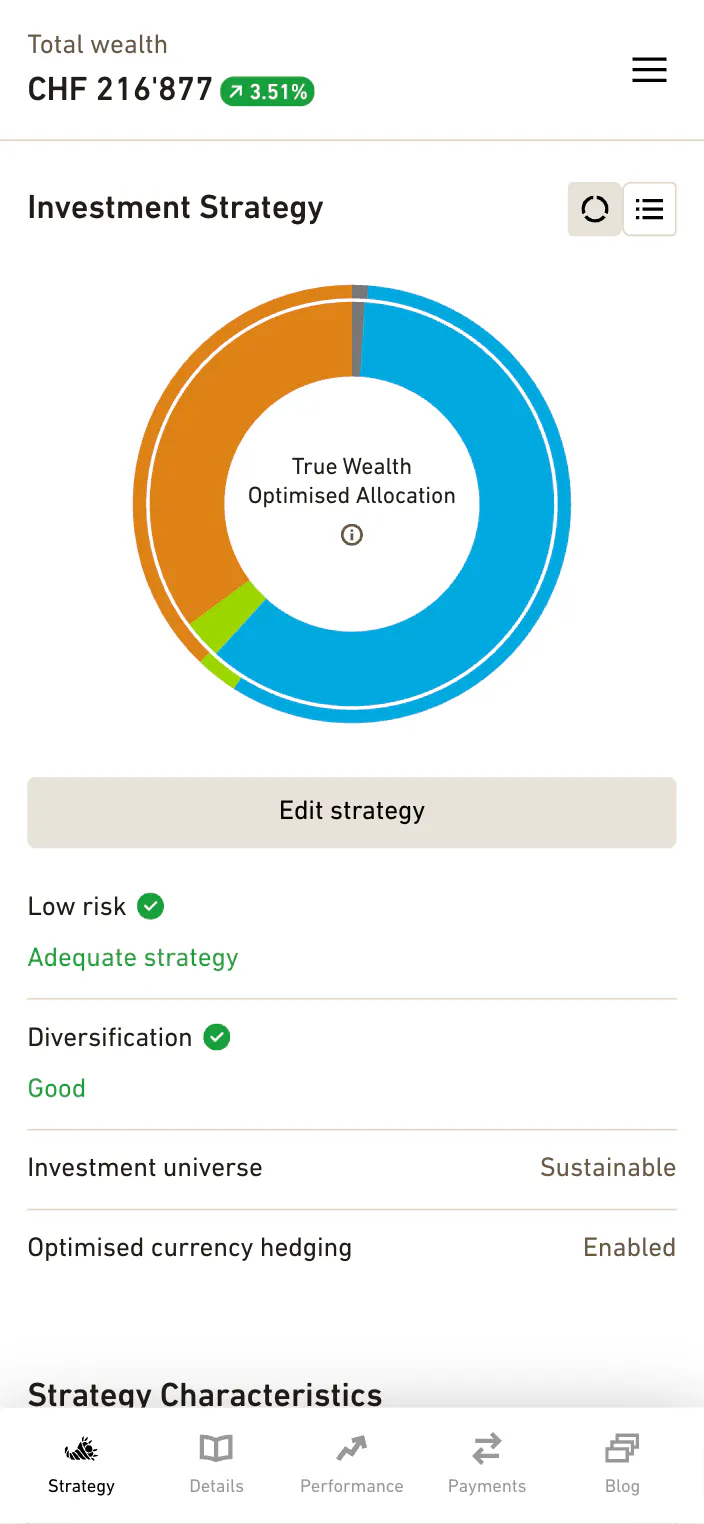
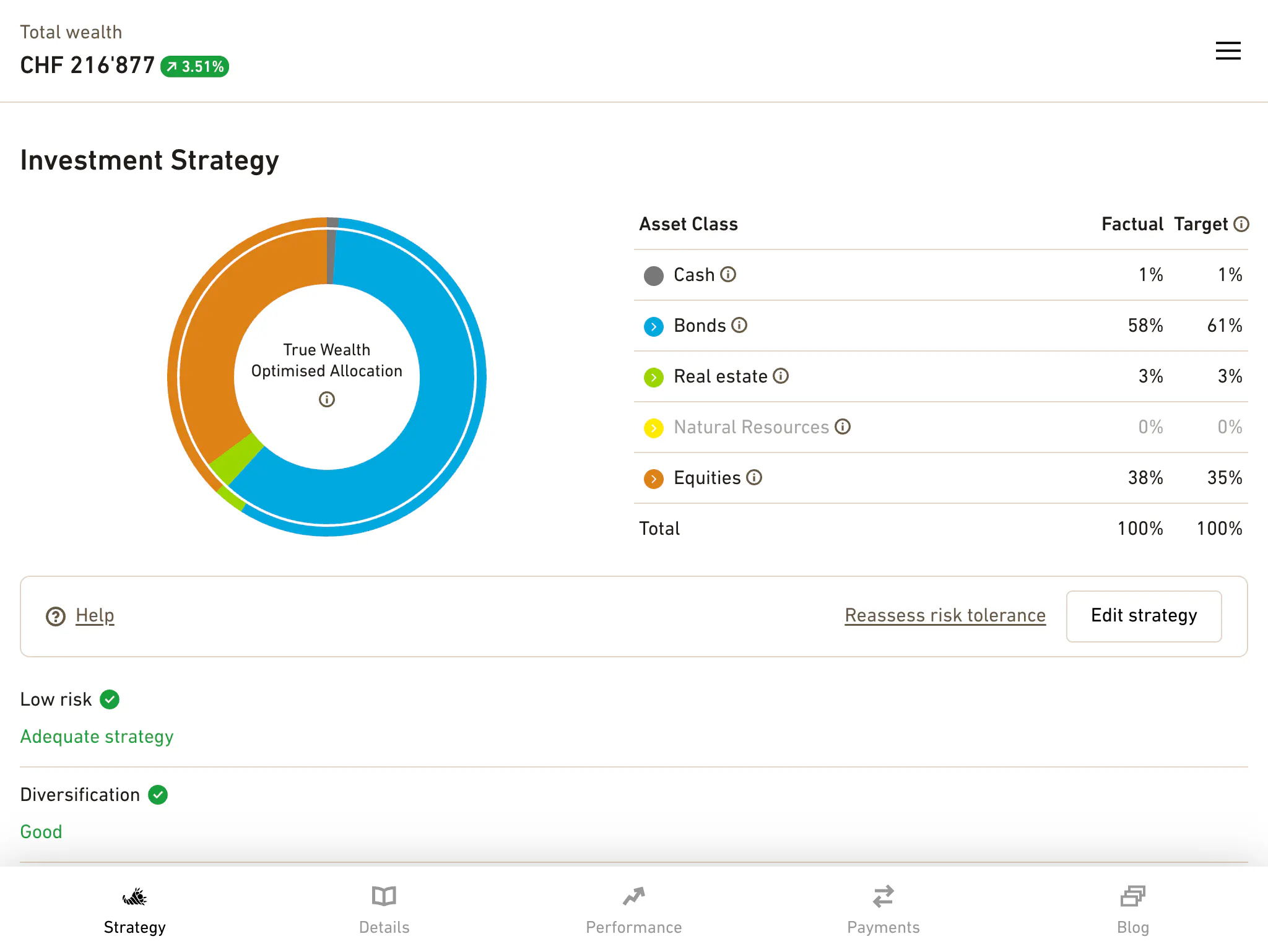
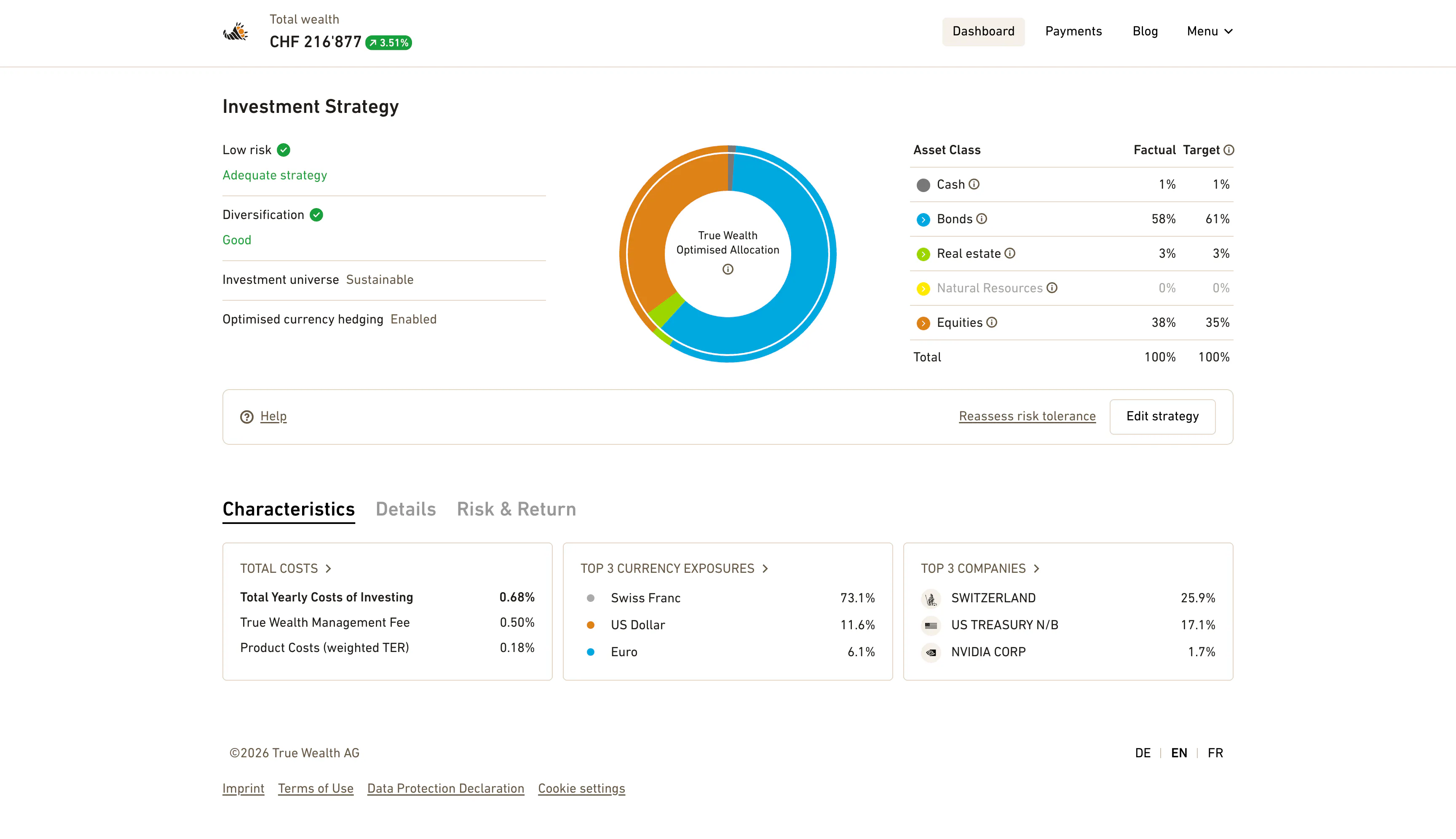
At True Wealth, we’ve already selected the best ETFs for various asset classes and implement your individual investment strategy. Always diversified and cost-effective. No stress, no complicated decisions.
ETFs are a great way to invest based on sound research while minimizing your investment risk. If you’re looking for a simple and cost-effective way to invest, ETFs are definitely worth considering. When making your selection, be sure to take the factors mentioned above into account. If you’re looking for a simple and stress-free option, True Wealth is here to help you invest your assets and keep them on track for the long term through rebalancing. This also brings a sense of calm to the process, as the system operates strictly according to rules and removes emotion from the decision-making process.
Do you have any questions or comments? Feel free to email Felix Niederer. See you soon!
About the author

Founder and CEO of True Wealth. After graduating from the Swiss Federal Institute of Technology (ETH) as a physicist, Felix first spent several years in Swiss industry and then four years with a major reinsurance company in portfolio management and risk modeling.
Get started today
Not sure where to start? Open a demo account now and upgrade it to a live account later.