Benchmark
In wealth management, a benchmark serves as a yardstick for comparison. Typically, this is a market index such as the SMI, the S&P 500, or the MSCI ACWI (a popular global stock index). Investors can use the benchmark to determine whether their own investment has outperformed or underperformed the market.
A benchmark index is a basket of investment instruments traded on a specific market. The weightings of the individual positions are usually based on the market capitalization of the respective companies. As a result, large companies are more strongly represented in the benchmark, while smaller companies have less influence. There are different types of benchmarks, but they all have a theoretical return that is calculated by multiplying the weighting by the price changes of the shares included. Depending on the type of benchmark, dividends are also taken into account. In this case, it is referred to as a total return index. Otherwise, it is called a price index.
True Wealth recommends using a total return benchmark whenever possible, as it provides more realistic results.
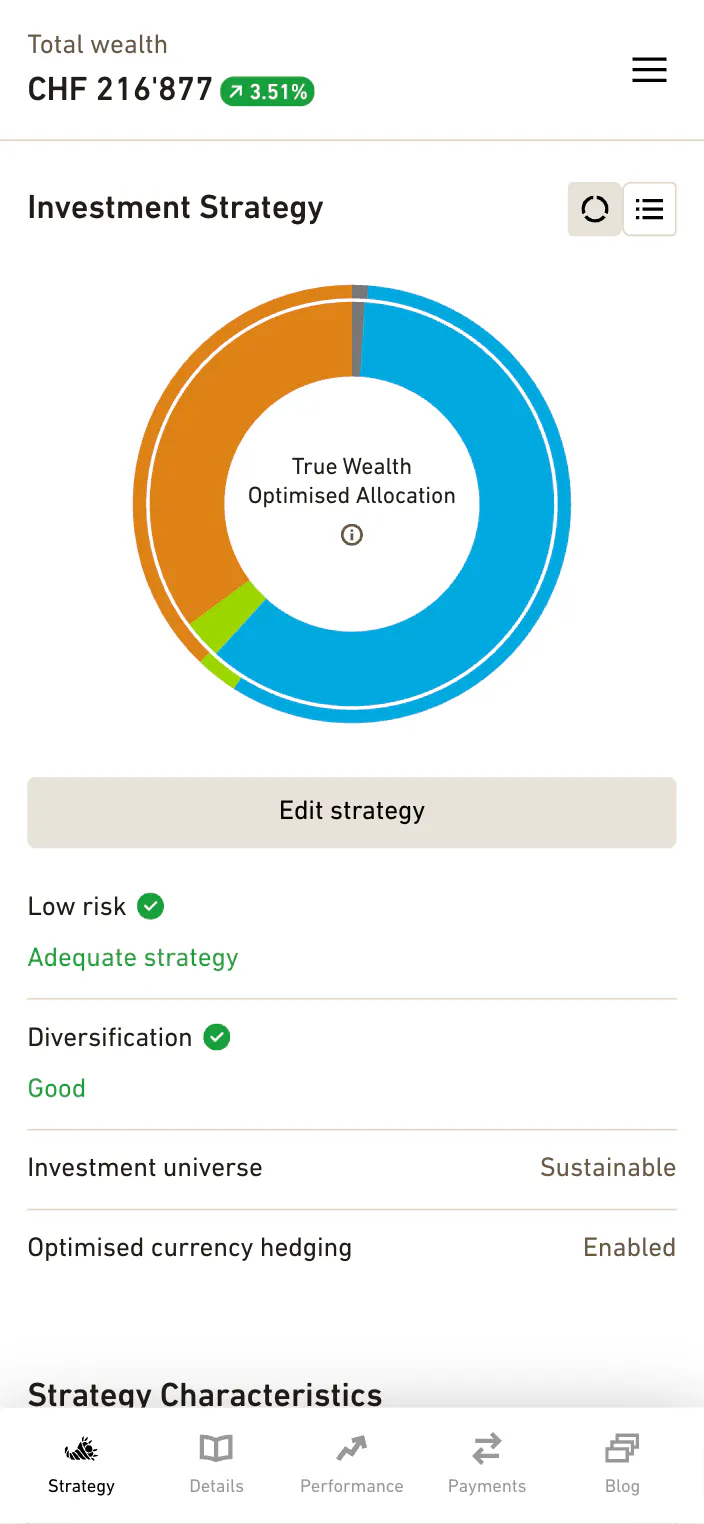
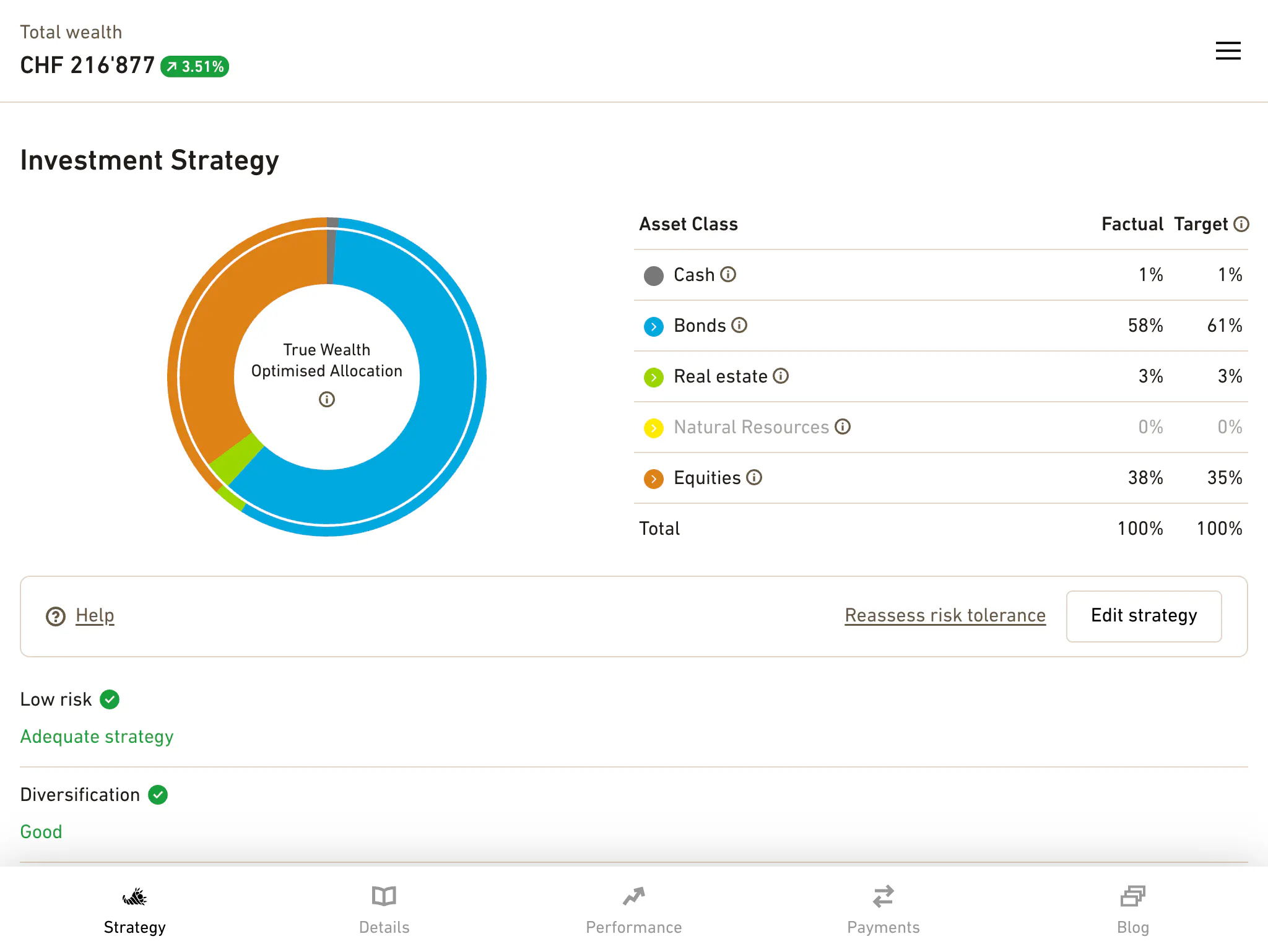
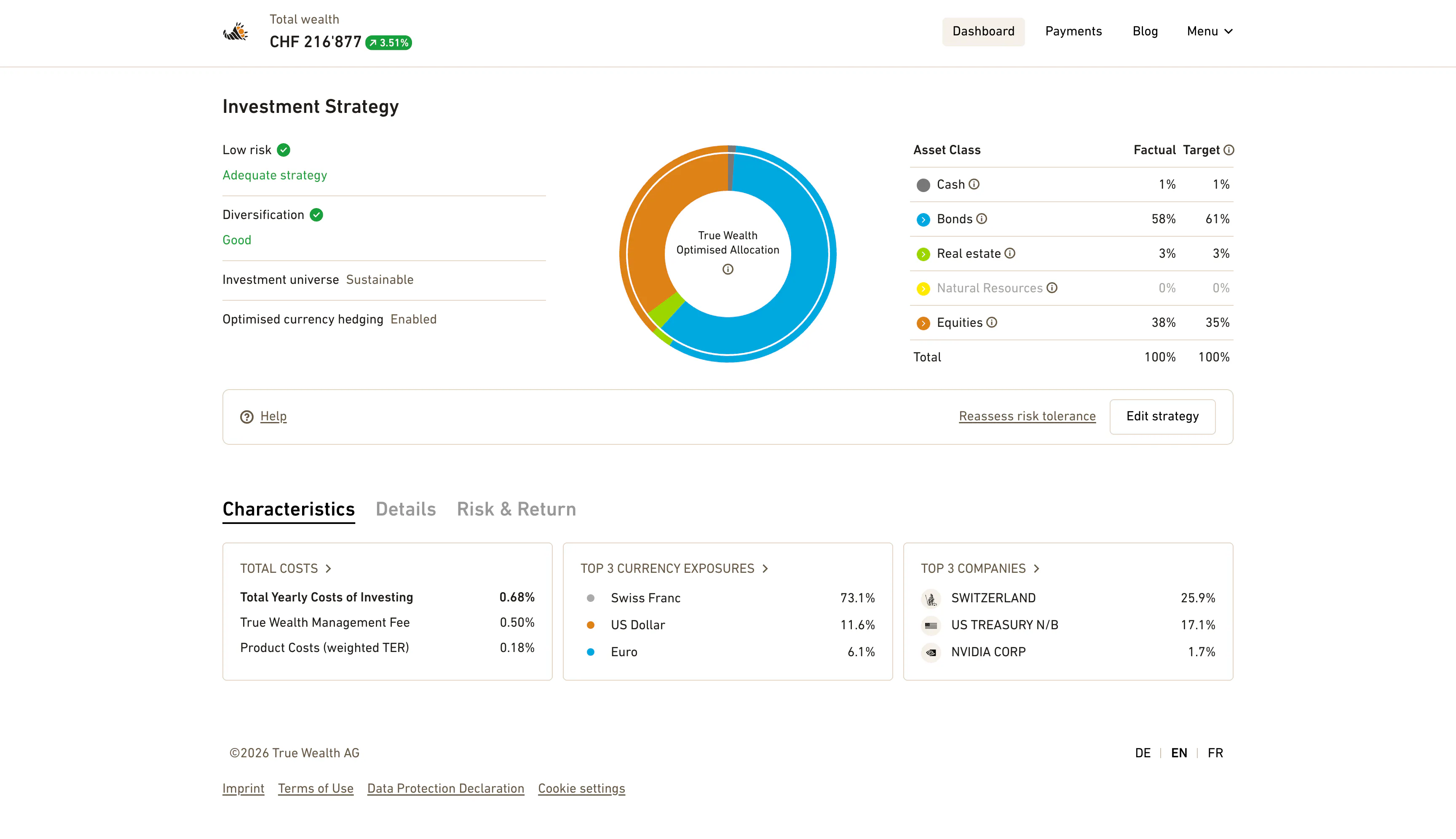
True Wealth customers can also see the multi-asset benchmark in the app that exactly matches their own investment strategy. However, since a real-money investment always involves certain implementation costs, your own return may differ from the theoretical index. We will discuss this topic in more detail in the following article:
Why does my portfolio return differ from the multi-asset benchmark?
Can’t find what you’re looking for?
Contact usGet started today
Not sure where to start? Open a demo account now and upgrade it to a live account later.