#60 How risk management avoids cluster risks in the portfolio
When investing, it is essential to consistently avoid cluster risks. If a single risk becomes too large, the portfolio becomes unbalanced. This can result in unnecessarily high losses – even if the basic investment strategy is well chosen.
Diversification is one of the most important principles of investing. What may be exciting in a casino has no place in long-term wealth accumulation. No sensible investor puts all their eggs in one basket. The goal is rather to achieve the most attractive return possible with controlled risk.
Many assume that passive investing – for example, via index funds – automatically provides good diversification. But that is a fallacy. In recent years, significant concentrations have formed in various markets. Companies such as Nvidia, Apple, and Microsoft are now heavily weighted in numerous ETFs and shape the performance of entire indices.
Even focusing on the Swiss stock market does not solve the problem, but merely shifts it. Those who invest only in Switzerland are heavily dependent on a few heavyweights such as Novartis, Nestlé, and Roche.
Multiple funds do not necessarily mean less risk
Another common misconception is that multiple funds automatically mean better diversification. In fact, the same security may be included in different funds. Therefore, it is not the number of products that is decisive, but rather the overall exposure to individual companies.
This approach applies not only to equities, but also to countries, currency areas, and economic sectors. Cluster risks often arise unnoticed – especially when they build up across multiple products.
Measuring and limiting exposure correctly
A cumulative view is crucial for correctly assessing cluster risks. What is relevant is your total exposure to a company across all equity and bond positions.
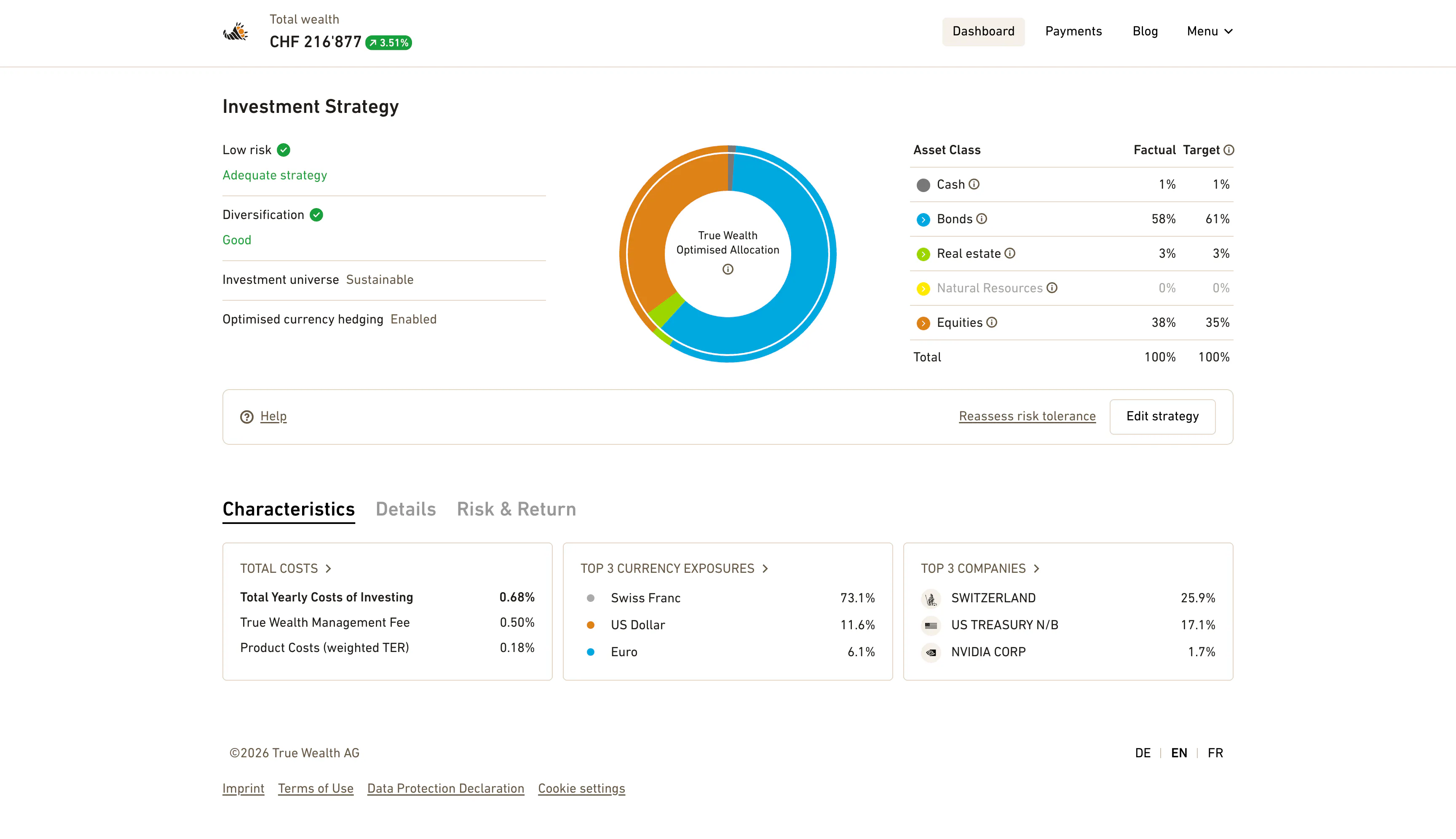
At True Wealth, this cumulative exposure is reported transparently. We also set clear limits: currently, exposure to a single company is capped at 15 percent. This ensures that no single security dominates the portfolio.
This overall view is particularly important when it comes to bonds. Often, several bonds from the same issuer with different maturities are in circulation. Without a consolidated view, the actual cluster risk often remains hidden.
Limits even for reliable debtors
Even with supposedly low-risk issuers, it makes sense to set limits. Even countries are not risk-free. That is why True Wealth limits its exposure to the US government as a debtor to a maximum of 35 percent, for example.
A closely related risk is currency exposure. It is considered unlikely that the US will repay its high debts in full. Debt relief through inflation is more plausible. This development devalues the US dollar against the Swiss franc, leading to corresponding losses on unhedged dollar positions.
Keep an eye on industry and regional risks
In addition to individual securities, debtors, and currencies, an excessive focus on certain industries or regions can also lead to cluster risks. Professional risk management therefore sets sensible exposure limits here as well.
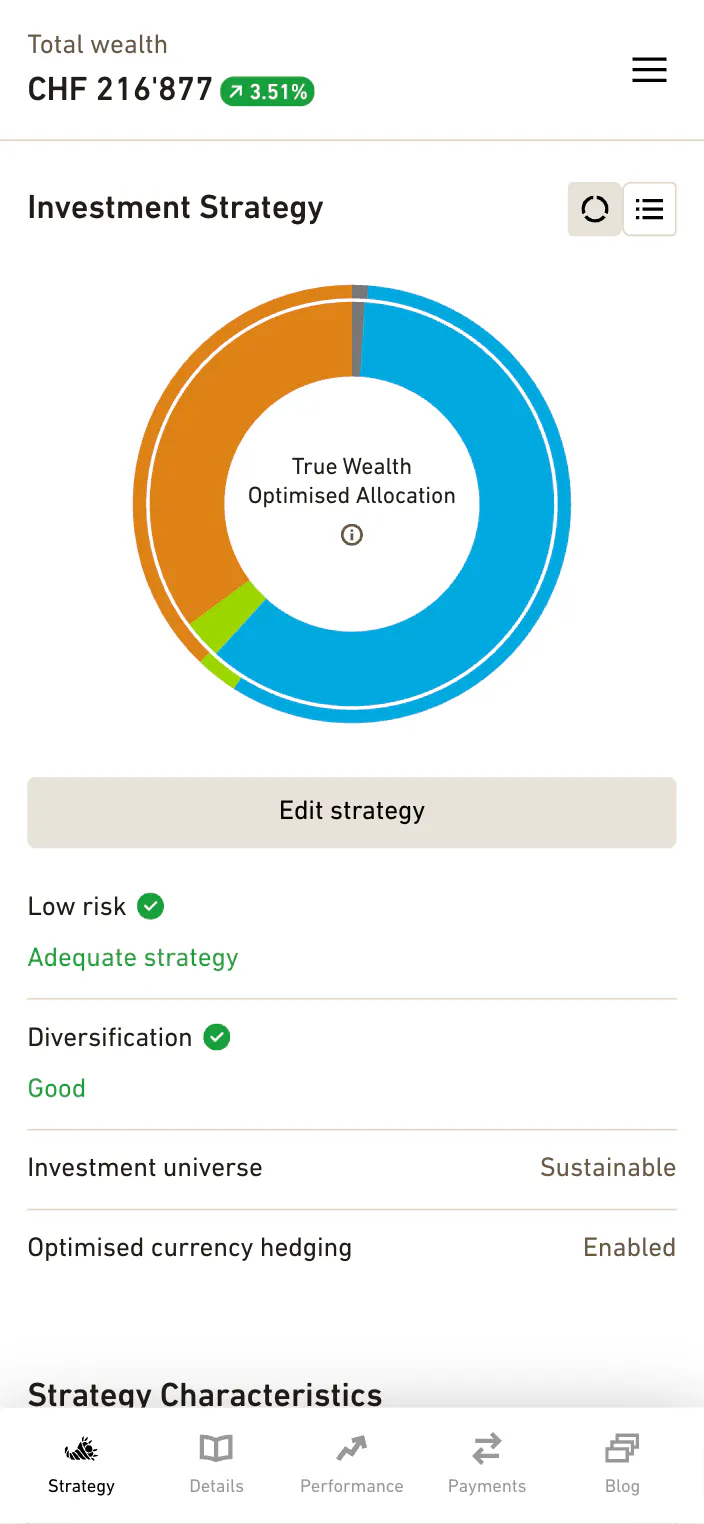
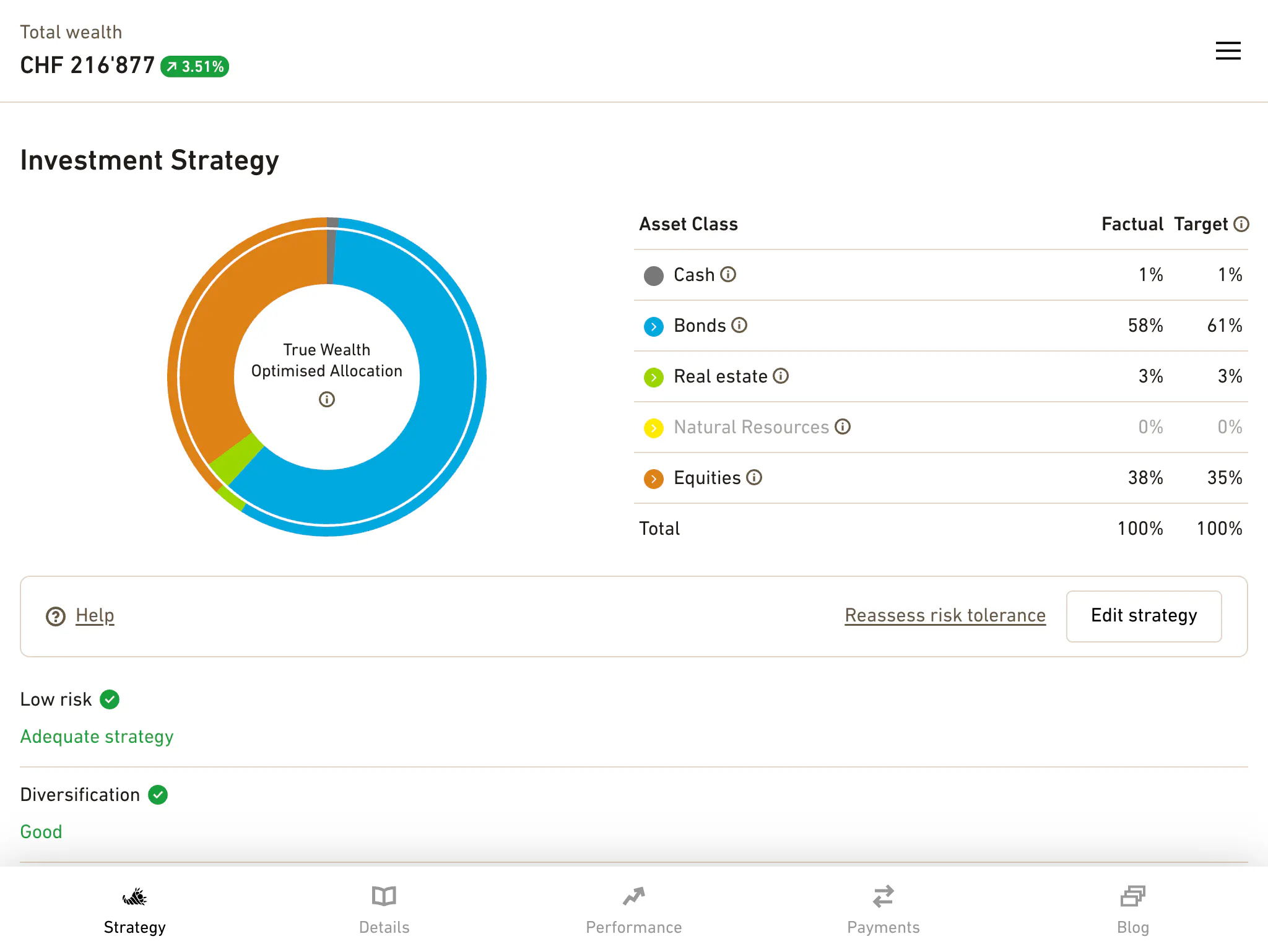
Those who invest using True Wealth's optimized strategy automatically benefit from these investment limits. However, many clients customize their strategy individually. Our app shows how well diversified the portfolio is at any given time. Exceeding defined exposure limits is not permitted, thus protecting against excessive imbalances.
Manage your portfolio yourself – and where do you set the limits to avoid cluster risks? Send me an email.
About the author

Founder and CEO of True Wealth. After graduating from the Swiss Federal Institute of Technology (ETH) as a physicist, Felix first spent several years in Swiss industry and then four years with a major reinsurance company in portfolio management and risk modeling.
Get started today
Not sure where to start? Open a demo account now and upgrade it to a live account later.