#23 Real estate or REITs: Which is the better investment?
Buying or renting a property? A question that occupies many people. It is also relevant from an investment perspective. However, there is also an alternative way to invest in real estate without physically buying it and this is the subject of the following podcast.
In the world of real estate investing, there are several ways to benefit from the property market. Two of the most popular options are direct investment in real estate and participating in Real Estate Investment Trusts, or REITs. Both approaches have their advantages and disadvantages.
Direct Real Estate Investments
Direct real estate investment refers to purchasing properties outright. These can be residential, commercial, or investment properties for personal use or for letting. Key advantages of real estate as an asset class include tax incentives, historical long-term capital appreciation, and a degree of inflation protection.
Advantages of direct investments:
- Tax incentives: Direct real estate investments offer various tax benefits, including deductions for mortgage interest and property maintenance costs.
- Leverage: Purchasing a property typically involves taking out a mortgage from a bank. Using borrowed capital creates leverage, making it possible to make larger investments and potentially achieve higher returns. However, taking on debt also increases risk for the investor.
- Capital appreciation: Property prices have been rising steadily since the turn of the millennium. The Swiss real estate market has long been characterised by high price levels and stable performance. Available land is limited, and demand for housing is particularly strong around urban centres. Consequently, real estate as an asset class generally benefits from capital appreciation.
- Inflation protection: Experience shows that tangible assets like real estate offer investors a hedge against inflation. When inflation is high and interest rates are low, property prices tend to rise. At the same time, currency depreciation erodes the real value of the outstanding mortgage debt.
Disadvantages of direct investments:
However, investing directly in real estate also comes with drawbacks.
- Poor diversification: A major disadvantage of direct property investment is the lack of diversification. Investing in just one or a handful of properties leads to a heavy concentration of risk. Local real estate markets also tend to move in cycles. If a sharp correction in Swiss property valuations occurs, the broader Swiss economy is likely to face headwinds at the same time—with knock-on effects for the labour market. In that scenario, two problems collide at once.
- Margin call obligations (Nachschusspflicht): When buying property directly, the risk of margin calls must be considered: if the property’s valuation drops below a certain threshold, the mortgage lending bank can demand a partial or full repayment of the loan. As the mortgagor, you are personally liable for this without limitation.
- Workload: The time and effort required to manage real estate should not be underestimated. Property management alone requires considerable time and commitment. From ongoing maintenance and letting to resolving tenant issues, holding physical property involves a substantial amount of work.
- Low liquidity: Compared to other asset classes such as equities or bonds, real estate investments are far less liquid and tie up substantial amounts of capital. Selling a property can take months and incur significant transaction costs.
Real Estate Investment Trusts (REITs)
REITs (Real Estate Investment Trusts) offer an alternative way to invest in real estate. They are specialised investment vehicles that enable investors to participate in the property market without having to purchase physical properties directly. They operate as corporations or trusts that invest in various types of real estate and generate regular income from rental revenue and property transactions. In Switzerland, real estate funds are also widely used for this purpose.
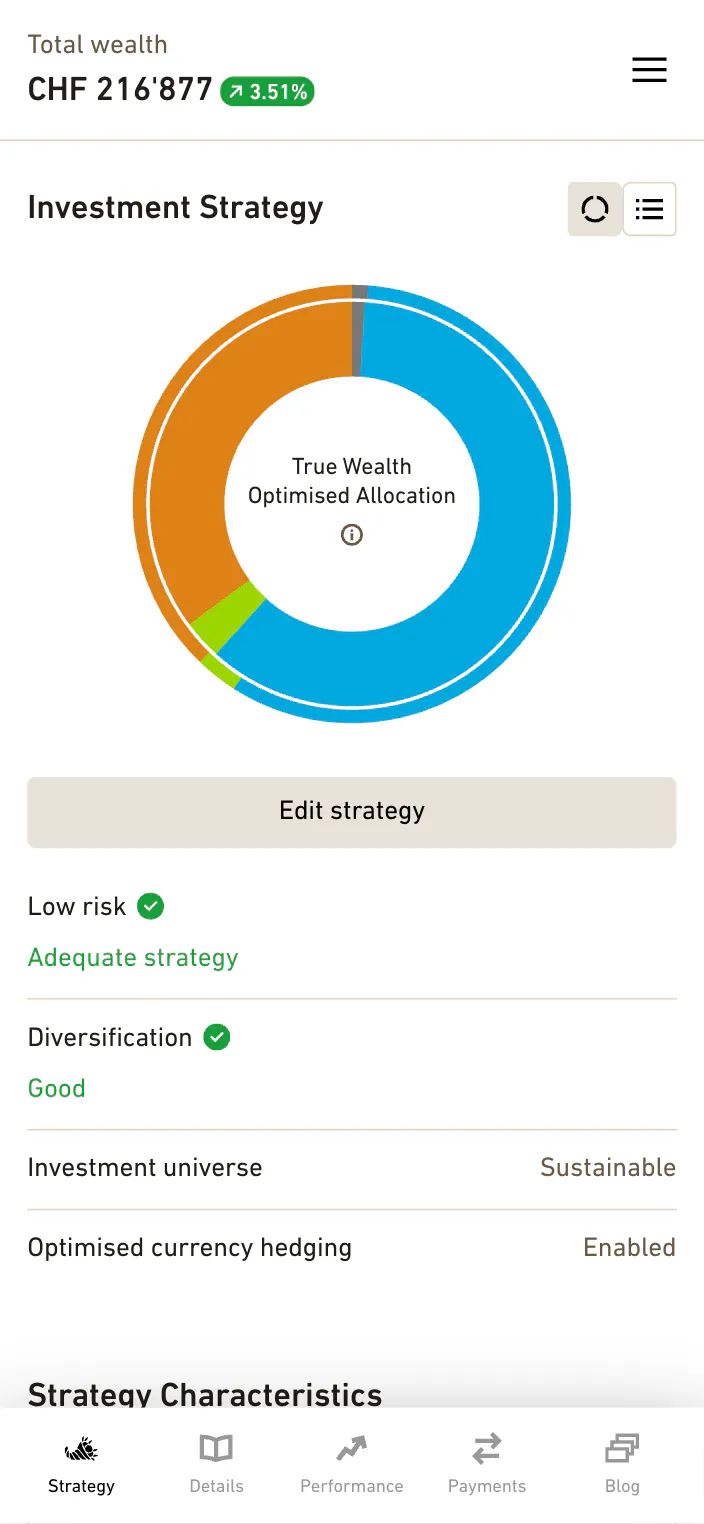
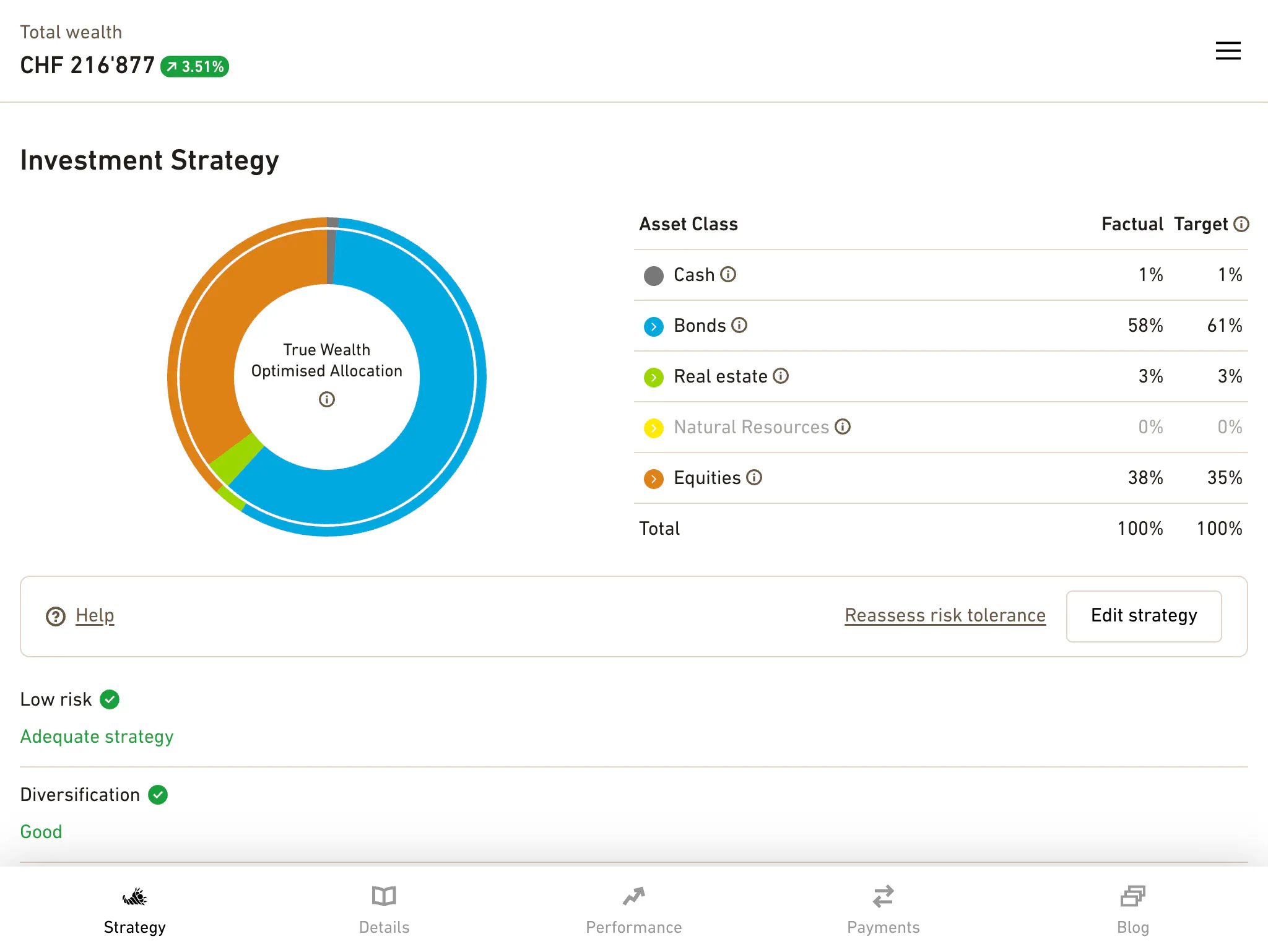
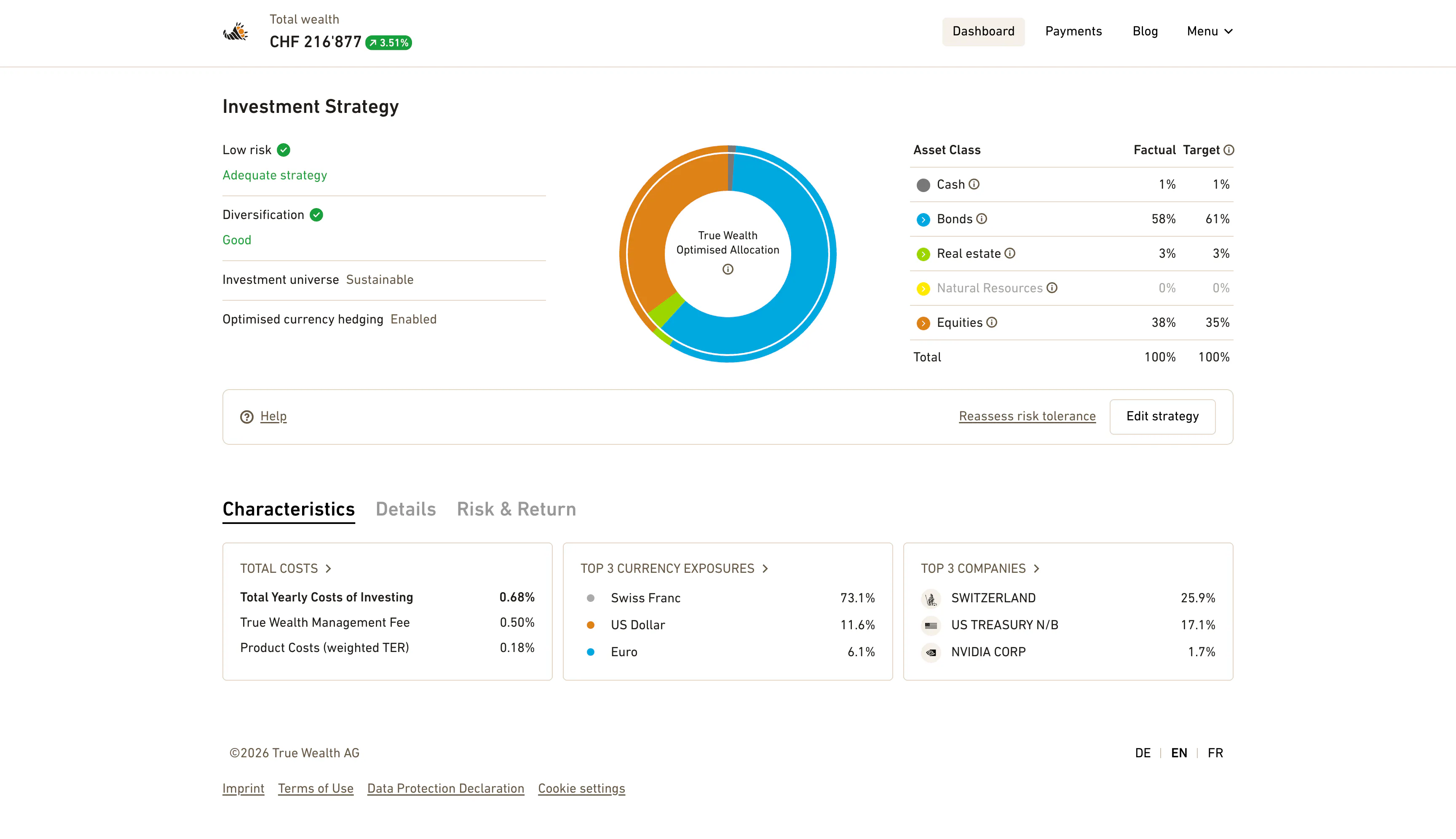
While REITs are subject to market volatility – and are particularly sensitive to interest rate hikes—real estate generally shows a positive correlation with inflation over the long term, offering a hedge against rising prices. From an investment standpoint, REITs allow you to capture nearly all the benefits of direct property ownership without the corresponding drawbacks. REITs are inherently liquid, well-diversified, feature debt leverage like equities without any margin call obligations, and require zero management effort. They are therefore well-suited as a portfolio addition, given their relatively low correlation with the traditional bond and equity markets. Furthermore, in most jurisdictions, REITs are legally required to distribute at least 90 percent of their taxable income directly to shareholders, making them attractive dividend-paying assets. For these reasons, at True Wealth we also incorporate REITs and real estate ETFs into our investment portfolios.
Personal Preferences
The decision between direct real estate investments and REITs ultimately comes down to your personal financial goals, risk appetite, and individual circumstances. It is essential to weigh the options carefully and recognise that both paths carry their own trade-offs.
Do you invest in real estate? If so, directly in individual properties or via REITs? I would be interested to hear your thoughts – feel free to send me an email.
About the author

Founder and CEO of True Wealth. After graduating from the Swiss Federal Institute of Technology (ETH) as a physicist, Felix first spent several years in Swiss industry and then four years with a major reinsurance company in portfolio management and risk modeling.
Get started today
Not sure where to start? Open a demo account now and upgrade it to a live account later.